



Calif. Board: GM Violated State Law in Attempting to Cancel Dealer's Franchise
In an Aug. 13 ruling, the California New Motor Vehicle Board sided with Folsom Chevrolet in a case that calls into question the way General Motors and other automakers measure and enforce sales expectations.

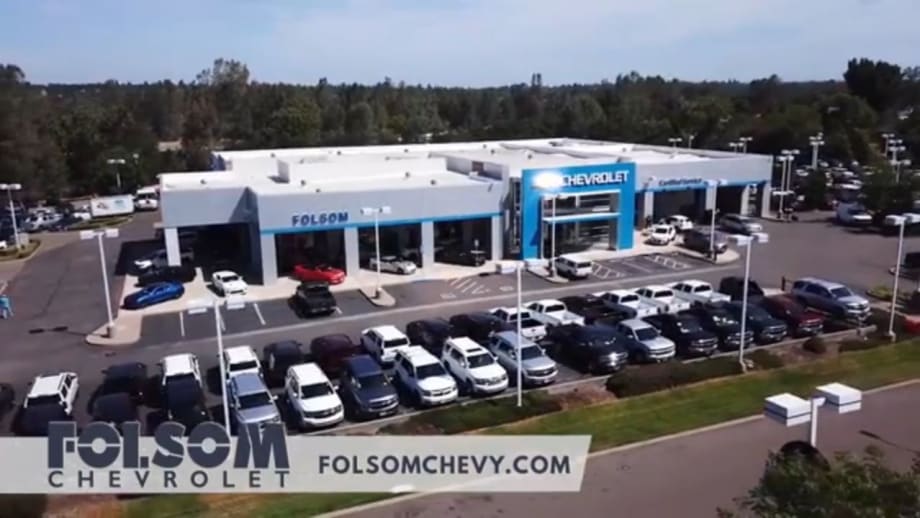
SACRAMENTO, Calif. — The state’s New Motor Vehicle Board sided with a California Chevrolet dealership in a case that calls into question the way automakers measure and enforce sales expectations, ruling that General Motors violated state statutes when it terminated Folsom Chevrolet’s franchise in late 2016.
The board ruled against GM’s use of a retail sales index (RSI) as bases for terminating Folsom Chevrolet’s franchise agreement, determining that the automaker’s reliance on the sales efficiency metric violated state law because it failed to account for a number of the dealership's market circumstances. The law firm representing the dealership, Scali Rasmussen, said the decision puts GM and all other manufacturers on notice.
“This decision is a phenomenal victory for all California dealers and will have ripple effects across the country,” said Christian Scali, the firm's founder and managing partner. “For example, this outcome provides not only a shield as used in this case but potentially a sword for recovery of damages caused by GM’s application of the faulty metric,”
Previous cases in other states have come out in favor of dealers facing termination over RSI and other metrics that fail to account for market nuances, most notably the 2016 case involving Beck Chevrolet in New York. But the Folsom Chevrolet case is the first in California to call the use of such metrics a violation of that state's vehicle code.
The sales efficiency metric divides the dealer’s reported number of retail sales by the number of expected sales and multiplies the outcome by 100. An RSI of 100 means the dealership made its expected sales number exactly, while a score of 50 means it made only half that number of its expected sales.
According to the ruling, Folsom’s RSI in 2013 was 40.9, leaving it with a rank of 129 of the 133 Chevrolet dealers in California. For 2014, the dealership’s RSI was 44.4, giving it a rank of 124 out of 128 California Chevrolet dealers.
In May 2015, GM notified the dealership it was in breach of its dealer agreement because it failed to hit its sales and customer satisfaction obligations. Folsom Chevrolet was then given an opportunity to raise its RSI and CSI scores between July 2015 and December 2015. The automaker, however, said Folsom failed to correct its sales or customer satisfaction deficiencies during the period. A notice of termination was issued to the dealership on Nov. 3, 2016. Folsom then filed its protest of the termination with the board seven days later.
According to its ruling, the board found that GM’s RSI failed to account for the “impact of circumstances unique to Folsom’s market, including demographics, geography, and brand preferences.” The board also noted that a GM expert said Toyota and Honda are stronger brands in the dealership’s area and agreed that “the more local the benchmark, the more sensitive it will be to local conditions.”
Accounting for brand bias by controlling for demographic variables of age, income, education level, and population density, as well as whether the dealership is in the five-county area, results in a reduction of the RSI requirement for Folsom of approximately 30%, the board noted in its decision.
“While it may be a legitimate concern that General Motors would like to measure its dealers in a uniform method across the country and manufacturers do have a legitimate interest in monitoring the sales outcomes and effectiveness of its dealerships and addressing weaknesses in its sales force, the General Motors RSI and the assigned [area of geographic sales and service advantage (AGSSA)] in this case are flawed,” the board said in its ruling, noting that the RSI overstates sales opportunity by assigning 100% of the registrations despite Chevrolet dealerships in California and in the Sacramento area make less than 41% of their sales within their AGSSA.
“RSI also does not include any calculation of the opportunity to sell outside Folsom Chevrolet’s AGSSA, and does not account for local conditions, such as demographics, market characteristics, and local economic circumstances,” the board stated in its ruling. “As for Folsom Chevrolet’s AGSSA, it was assigned an unfair AGSSA in size and distances of registrations from the dealership location, with required absorptions of portions of two poorly or underperforming terminated dealerships, the fact that it is part urban and part rural, and is an AGSSA which grew over 80% in registrations between 2010 and 2014.”
In a statement issued to F&I and Showroom, GM spokesperson Jim Cain said the automaker “strongly disagrees” with the board’s decision. He added that a decision to appeal the ruling will be announced at a later date.
“The Retail Sales Index is currently calculated in California and elsewhere is one of multiple metrics and other sources of information considered by GM in evaluating its dealers’ compliance with their obligations,” Cain said in an emailed statement. “There are no plans at this time to revise the RSI calculation for California dealers.”
Originally posted on F&I and Showroom
More Dealer Ops

Ladies and Gentlemen, This Is a Dealership: Why the Fundamentals Still Decide Who Wins
A teaching moment by a legendary football coach happens to apply perfectly in the auto retail space. Learn what it is and how to use it to your store’s advantage.
Read More →
Timing the Market Can Hurt Long-Term Program Performance
For dealer-owned reinsurance entities, avoiding volatility entirely can mean falling behind inflation and missing market rebounds that drive long term surplus growth. Missing just a handful of strong market days can materially impact cumulative returns—an important reminder for long horizon trust and investment strategies.
Read More →
Dealer Ads and the FTC
The agency has made it clear in recent enforcement actions and warnings, in auto retail and other industries, that advertised prices must include all nonoptional costs to the consumer.
Read More →
Used Autos Supply Dwindles
The March shopping surge, despite high prices, cut into inventory by the most since the thick of the pandemic, Cox Automotive analysts calculated.
Read More →
Managing Risk Effectively Through Changing Times
The variables influencing risk pricing have changed significantly over the past five years. Being proactive and responsive to emerging trends is not optional but essential.
Read More →
Survey Reveals What Won't Fix What's Breaking Car Sales
AutoPayPlus says extra-long auto loans are trapping consumers and threatening the dealer trade-in cycle, and that the industry is leveraging the wrong tools to combat high MSRPs.
Read More →
IA American Appoints Two Execs
Senior vice presidents of the company's agent and dealer channels chosen to support general agents and help auto dealers with sales and performance.
Read More →
Cox Automotive Acquires Inspection Firm
Full ownership of Alliance Inspection Management, or AiM, meant to unlock growth for Manheim inspection capabilities
Read More →
Assurant Expands Partnership With Holman
Extended collaboration delivers training, products and performance development to 30 newly acquired Holman dealerships
Read More →
Franchises, Throughput Down in First Half
A handful of states see franchise growth through June, while EV sales per store boost overall business in U.S.
Read More →