



House Approves Dodd-Frank Replacement Bill
Four days after the U.S. House passed a bill aimed at reversing a number of Dodd-Frank financial regulations and scaling back the CFPB’s authority, the Treasury Department recommended that the bureau’s powers be reduced in a report containing more than 100 suggestions for financial reform.

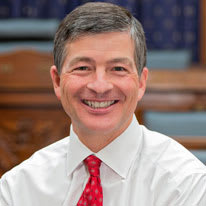
WASHINGTON, D.C. — With the U.S. House’s passage of H.R. 10 last Thursday, June 8, U.S. Rep Jeb Hensarling (R-Texas)’s crusade to dismantle the Consumer Financial Protection Bureau-creating Dodd-Frank Act took a major step forward.
The passage of the bill, which passed the House by a primarily partisan 233-to-186 vote, is less certain in the U.S. Senate, where Republicans hold 52 seats. That means they’ll need Democrats to cross party lines to get the necessary 60 votes.
“Every promise of Dodd-Frank has been broken,” said Hensarling, who chairs the House Financial Services Committee, which passed the bill in May by a completely partisan 34-to-26 vote. “Fortunately for all, there is a better, smarter way. It’s called the Financial CHOICE Act. It stands for economic growth for all, but bank bailouts for none.”
Hensarling’s legislation would roll back a number of Dodd-Frank financial regulations, including Volcker Rule restrictions on certain speculative investments by banks. It would also eliminate the Federal Deposit Insurance Corporation’s orderly liquidation authority and establish new provisions regarding financial institutions bankruptcy.
The bill would also repeal the Durbin Amendment’s limitations on fees charged to retailers for debit card processing. It would also scale back the CFPB’s authority to regulate large banks and payday lenders, convert the regulator into a consumer law enforcement agency, subject it to congressional oversight, and eliminate the agency’s authority to take action against entities for abusive practice.
The legislation, which was received by the U.S. Senate on Monday, would also nullify the CFPB’s guidance on dealer participation, and add a few more steps to the CFPB’s guidance-writing activities.
“Access to affordable credit is essential to customers and their dealers,” said Peter Welch, president and CEO of the National Automobile Dealers Association (NADA). “Chairman Hensarling, members of the House Financial Services Committee, and the members of Congress who supported H.R. 10 and worked to include these vital consumer protections should be commended for their efforts to keep auto financing affordable and available to consumers everywhere. I look forward to the Senate taking timely actions to help cement these consumer protections into law.”
The House vote came four days before the U.S. Department of the Treasury issued its first in a series of reports to President Donald Trump addressing regulatory reform in the financial services industry. In February, the president signed an executive order directing the secretary of the Treasury to consult with members of regulatory agencies and report back in 120 days and periodically thereafter.
“We congratulate the House on passing the Financial CHOICE Act,” said U.S. Treasury Secretary Steven T. Mnuchin. “The report we are releasing today focuses on solutions the executive brand can execute through regulatory changes and executive actions.”
The 150-page report contains more than 100 suggested changes, including consolidating regulators with similar missions, easing the burden of statutory stress testing, and reducing the powers of the CFPB, among other recommendations.
As a next step, the Treasury and the Trump administration will begin working with Congress, independent regulators, the financial industry, and trade groups to implement the report’s recommendations, according to the Treasury’s press release.
“Properly structuring regulation of the U.S. financial system is critical to achieve the administration’s goal of sustained economic growth and to create opportunities for all Americans to benefit from a strong economy,” Mnuchin said. “We are focused on encouraging a market environment where consumers have more choices, access to capital and safe loan products — while ensuring taxpayer-funded bailouts are truly a thing of the past.”
Richard Hunt, president and CEO of the Consumer Bankers Association, issued the following statement regarding the Treasury Department’s report: “The Treasury Department’s report is an important first step in recognizing how a duplicative and onerous regulatory environment harms banks, the economy, and, more importantly, consumers. … We especially applaud Secretary Mnuchin and the department for suggesting reforms to the CFPB’s governing structure, as CBA believes a bipartisan commission at the bureau is paramount to creating long-term stability and certainty for the industry. In addition, we also encourage the department’s recommendation to provide a process over federal regulators to streamline regulatory efforts.”
Originally posted on F&I and Showroom
More Compliance
Dealer Ads and the FTC
The agency has made it clear in recent enforcement actions and warnings, in auto retail and other industries, that advertised prices must include all nonoptional costs to the consumer.
Read More →
AAMS Training and Mosaic Compliance Services Merge
The strategic combination is intended to expand technology-driven compliance solutions for the automotive industry.
Read More →
The Jurisprudence of Pricing
Legal concept helps makes sense of California’s recently passed version of the failed federal CARS legislation.
Read More →
Trump 2.0 and Enforcement Priorities
The upshot is don’t relax, because regulation indeed continues.
Read More →
June Is Automotive Service Professionals Month
Observance is opportunity to thank technicians for their crucial role in auto retail.
Read More →
Cox Automotive Releases Compliance Guide
New edition walks auto dealers through relevant regulations for 2025.
Read More →
Trump 2.0 and Retail Automotive
Administration’s plans should generally bode well for the industry.
Read More →
CARS Rule Update: 5th Circuit Oral Arguments Recap
In this video, Jim Ganther of Mosaic Compliance Services, recaps the key takeaways from the oral arguments in the critical CARS Rule case, including potential outcomes and what dealers should do to stay ahead of compliance changes.
Read More →
State of the CARS Rule, Part 3
The players in the automotive industry should coordinate their responses to this pending regulation.
Read More →
The Future of Car Dealer Documents
Where forms, documents, agreements and contracts could be in 50 years.
Read More →