



The Future of Mobility Through Autonomous Vehicles and Technology
Throughout history, futuristic autonomous vehicles have been featured in iconic movies and television shows as technology designed to assist. However, as this technology has evolved and the future of travel is decidedly pointing to autonomous services, there is still much debate on how the future of mobility and mass transportation will be impacted.

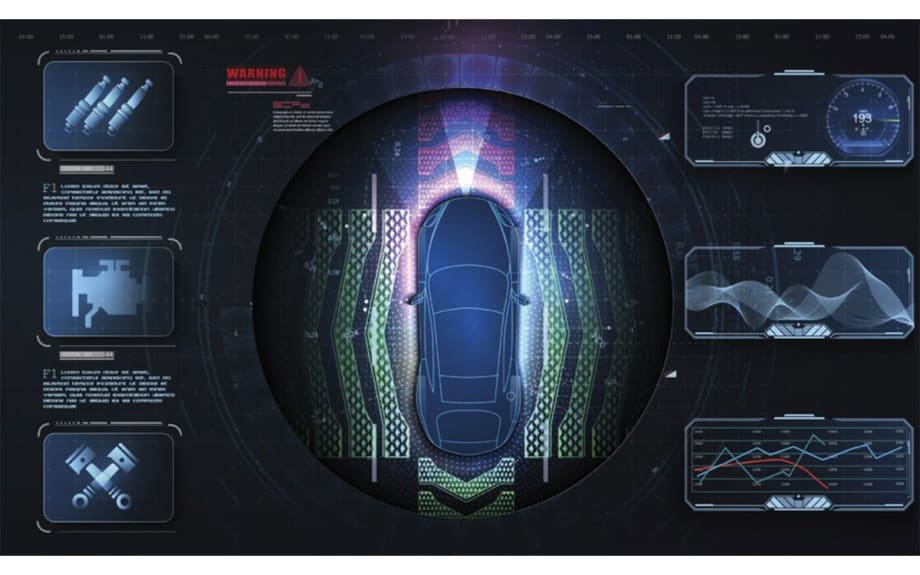
Throughout history, futuristic autonomous vehicles have been featured in iconic movies and television shows as technology designed to assist. However, as this technology has evolved and the future of travel is decidedly pointing to autonomous services, there is still much debate on how the future of mobility and mass transportation will be impacted.
Image by NATALYABUROVA via GettyImages.com
For generations, autonomous vehicles have been seen as the de facto mode of transportation for the future. Time and time again, futuristic autonomous vehicles have been featured in iconic action movies, cartoons, and television shows as technology designed to assist either the superhero or star of the show. For example, in 1966, Adam West’s portrayal of Batman’s Batmobile included self-driving capabilities, inspiring many to wonder and speculate on what the self-driving future could look like. Those who are familiar with the cartoon “The Jetsons” will remember much of the show’s focus was on autonomous cars, shuttles, and similar technologies. However, as this technology has evolved and the future of travel is decidedly pointing to autonomous services, there is still much debate on how the future of mobility and mass transportation will evolve, and in what timeframe.
We believe that autonomous solutions represent one of the most transformational technologies we will see in a lifetime.
Disruption in the Industry
When it comes to autonomous mobility and its certain future, the term “disruption” often comes to mind. Driverless vehicles and fleets are the disruptors of the transportation industry, as we know it today. But the actual disruption is something that will happen over time. We’re still in the early stages of the evolution of this technology, however. Even the low speed, fixed course autonomous shuttle vehicles are in their infancy as true transportation solutions, with many of today’s deployments being “firsts” for a number of cities and communities. The initial, regulated deployments that are underway right now with these multi-passenger vehicles are advancing the testing and proof points of safe autonomous mobility, and, we believe, they will be a major contributor for driving the disruption that will ultimately result in the full-scale adoption of autonomous mobility solutions for public transportation, and eventually for personal transportation.
Realistic Timeframes
Beginning to deploy low-speed, geo-fenced autonomous vehicles and fleets, as an alternative to traditional mobility use cases, is paving the way for testing what a complete driverless environment could and would look like. Interacting with pedestrians, mixed traffic, and other surroundings are some of the important lessons to be gained from these deployments that will greatly advance the anywhere, anytime, any-speed autonomous services. There are other important autonomous applications, such as farm equipment, highway trucking applications, package delivery, and industrial equipment, that are also important to the testing and perfecting of autonomy. Although most of the headlines today are about personal transportation, the impact for many businesses will also be substantial. For example, a report released by Bloomberg in May 2019 highlights a farmer who estimates he can save 80% on his farm chemical costs by using autonomous equipment. In the transportation of goods, labor represents a large percentage of the cost profile, which will be significantly impacted with autonomous solutions. There is plenty of motivation and positive impact to go around for businesses and consumers, however, a major challenge facing the autonomous technology revolution is managing realistic timeline expectations in the marketplace.
Several media publications suggest that the full widespread adoption of self-driving vehicles, buses, fleets, and public transportation is close, maybe even a couple years out. Although autonomous vehicles are being deployed around the world today in certain use cases such as the low-speed, fixed-route, geo-fenced routes, the full-scale adoption timeframe to ultimately realize true autonomous SAE level 5 deployments is a minimum of a decade away. There are also a significant number of opportunities to be addressed beyond just the vehicles themselves, such as cyber security, fleet orchestration and logistics, safety standards, infrastructure, transportation legislation, the customer experience, and more. All these areas are also evolving, making for stronger, more secure mobility solutions and a better autonomous customer transportation experience.
The Human Element and Safety
The first question consumers and legislators ask always revolves around safety. When a vehicle is autonomous, it is a fact that the vehicle does not see and interpret its surroundings today exactly as a human would, and therefore, it lacks a certain level of intuition. But, on the other hand, autonomous vehicles react to motion and events at a rate of two to three times faster than a human can, and the use of artificial intelligence will continually improve the needed interpretive logic. Most importantly, autonomous vehicles don’t get distracted by their surroundings or mobile devices. Human error and poor judgement are the leading causes of traffic accidents and deaths. There is plenty of research to validate that autonomous vehicles and equipment will dramatically improve safety in all applications. That being said, the immediate, safe-use cases, such as low-speed, fixed-route applications in a controlled environment, will be the guidepost for advancing into more complex, faster-speed applications and wider spread use in our communities and towns.
The Future of Mobility
Ultimately, safety will be the key determinant for the timeline of future deployments and expanded use of autonomous transportation solutions, and this will change the way people think about car ownership and public transportation. Today, we see autonomous fleets using this technology in the transportation of goods, farm equipment, maritime applications, and even package delivery. Each of these use cases are examples of where human intervention can be eliminated, and that’s where industry disruption is currently the most prevalent. What’s required to see the mass adoption of autonomous technologies that extend to all roads and highways is the ability to move from low-speed controlled environments safely into high-speed and more complex environments.
Another reality driving the transformation of mobility is the need to serve a new generation of riders. According to recent data released by Deloitte, millennials are less likely to purchase cars than past generations. The data states that 46% of millennials and Gen Z question the benefits of car ownership when rideshare is so easy. They also embrace new technology, making them well aligned with the future of autonomous vehicles. Widespread use of new transportation solutions will also help the baby boomer generation who may need additional help with transportation, especially for those who have difficulty driving. Connecting residents or constituents with various services through convenient and cost-effective mobility services will be an absolute requirement for attracting and retaining new residents and businesses to all communities.
The future of mobility is here today in the form of autonomous transportation, but it will continue to evolve over many years before we are able to experience the George Jetson effect. We believe that autonomous solutions represent one of the most transformational technologies we will see in a lifetime. The use cases will expand and extend into many new transportation services in the coming years to great benefit for businesses and consumers alike.
Joe Moye has over 25 years of technology leadership and management consulting experience in both the private and public sectors. Before joining Beep, Joe was the general manager of Virtustream’s Public Sector business, as well as serving as president of Blackbaud's (BLKB) Enterprise Software Group.
Originally posted on F&I and Showroom
More Digital

Dealer Debrief: New Technician Credential & Vehicles for Change
In this week's debrief, host Lauren Lawrence covers a new ADAS technician credential that is in the works and a partnership between NADA and Vehicles for Change.
Read More →
Dealer Debrief: Dealer's Choice Awards
In this week's debrief, host Lauren Lawrence covers reinsurance, IIHS safety picks, and voting for the 2026 Dealers' Choice Awards.
Read More →
JD Power Launches F&I Performance, ID Verification Tools
The resources are the first two offerings by the company's new Dealer Solutions division, which is being led by auto industry veteran Doug Betts.
Read More →
Advanced Safety Features Make a Difference
GM says research shows such technologies have made real inroads in reducing the rate of U.S. collisions as it aims for crash-free roads.
Read More →
Cox Automotive to Acquire Fullpath
The company says the deal brings artificial intelligence-native data and marketing infrastructure to its dealer network for a unified platform.
Read More →
Managing Risk Effectively Through Changing Times
The variables influencing risk pricing have changed significantly over the past five years. Being proactive and responsive to emerging trends is not optional but essential.
Read More →
Dealer Debrief: EV Sales, Brand Loyalty & More
In this week's Dealer Debrief, host Lauren Lawrence covers EV sales, tire brand loyalty, and new industry executive leaders.
Read More →
Reynolds, Corpay Partner to Enhance Dealership Payables
The new connection between the companies is designed to help digitize payments, targeting smoother transactions for automotive dealers.
Read More →
Owner Retention Stakes Have Never Been Higher
Service advisers represent dealerships’ foundation in fostering ongoing customer loyalty, and they must maintain certain standards to keep that foundation strong.
Read More →
Free Public Scoring System Rewards Honest Dealer Prices
CarEdge Dealer Transparency Index is based on verified quotes, and retailers can be rewarded with badges and other marketable proofs of honest pricing.
Read More →